Hems
A hem is the job we do most. It is also the job most likely to go wrong if the shoes stay at home. The length you want is the length with the shoe you will wear, standing the way you stand, not the length of the cloth on a hanger.
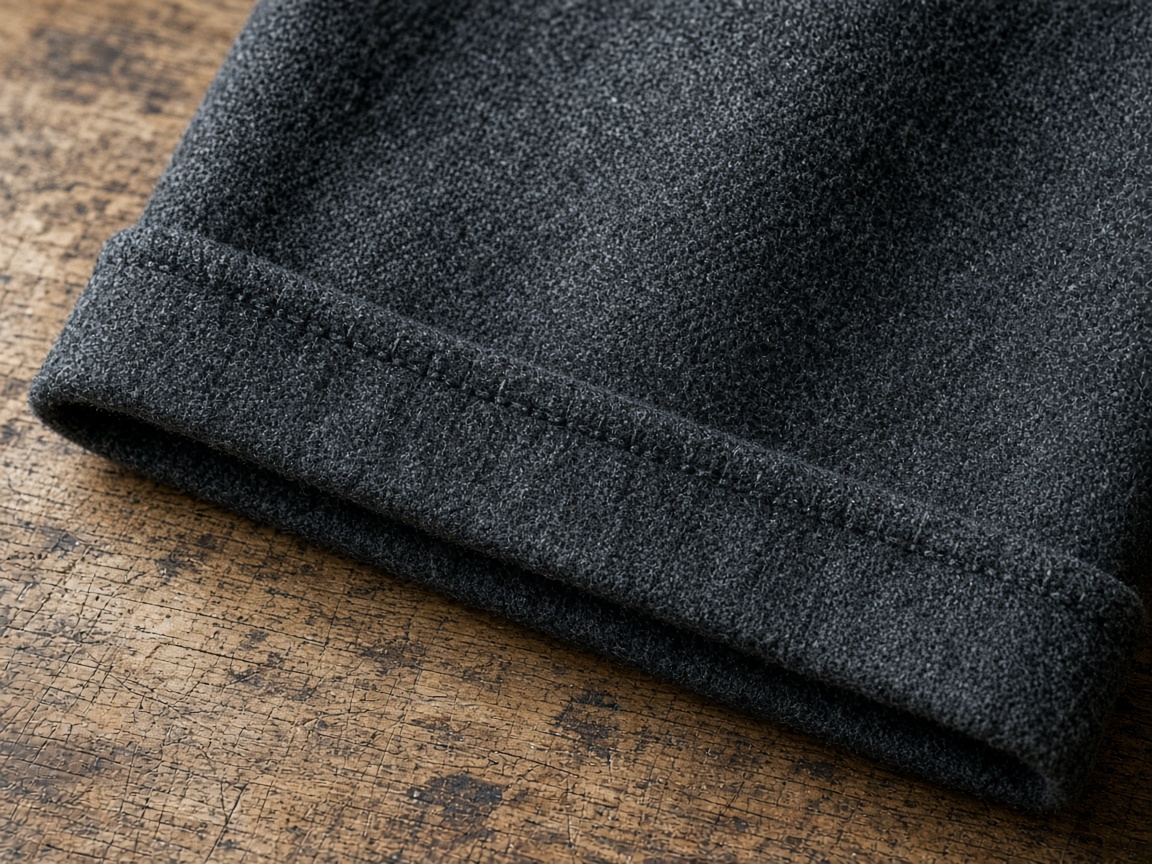
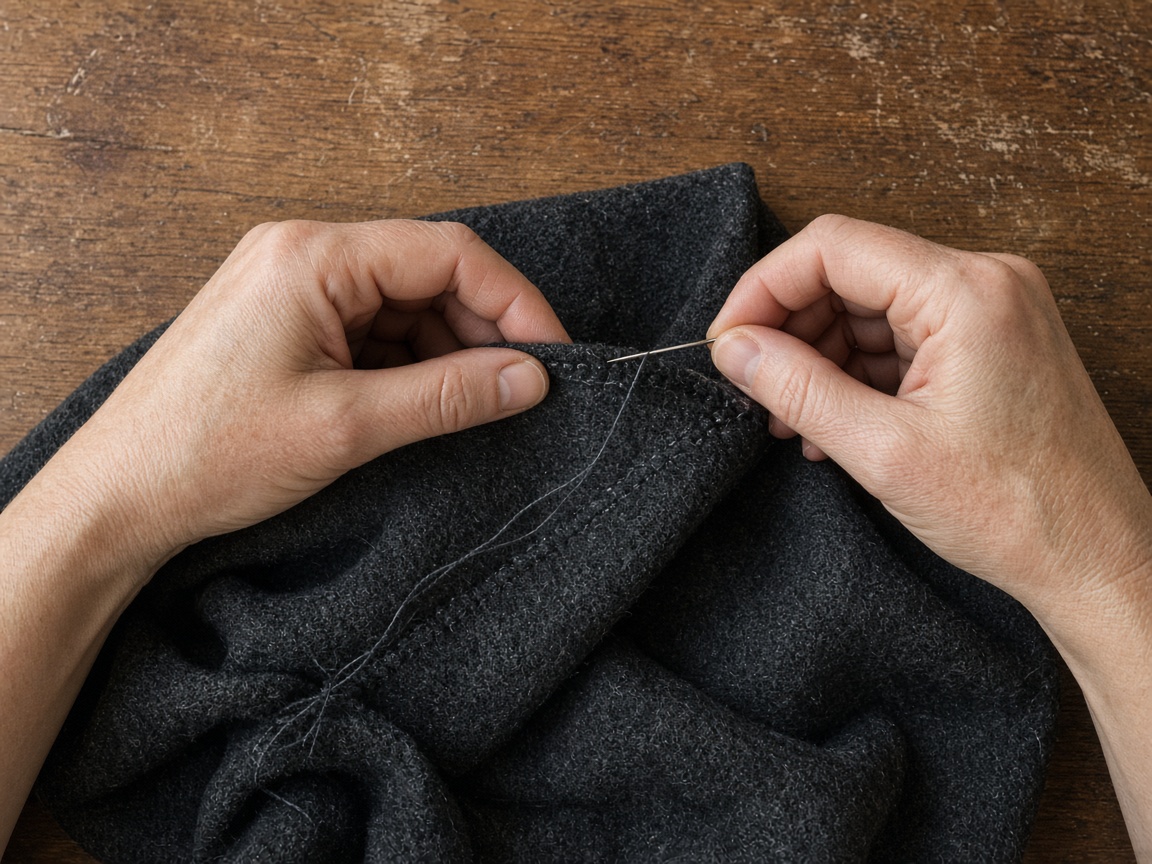
Drop a hem off between 9:00 and 12:00, Sunday to Friday. You do not need an appointment for an ordinary hem. You do need the garment washed. A dirty hem dulls the needle and leaves a line of grit in the fold. If it is not clean, we will ask you to take it home. Friday’s drop-off does not start the clock. Working days are Sunday to Thursday, and the morning you leave it counts as day one.
A plain trouser or jeans hem is ₪58, ready in three working days. Left on Monday morning, that is Wednesday from 15:00. A suit-trouser hem, with the crease put back, is ₪78 and the same three days. Keeping the original hem on a pair of jeans, unpicked and sewn back so the faded line stays, is ₪92 and four working days. The full counter list is on the front page.
The shoes
Bring the shoes. If the wedding shoe is a heel of seven centimetres and you arrive in trainers, the dress will be short on the day. If you live in flats and own one pair of heels “just in case,” tell us which life the hem is for. We can pin one leg to a small break and the other to no break, and you can look in the mirror and choose. We cannot guess after you have left.
For trousers, say which of these you want, in words we can write on the ticket:
- No break. The cloth stops cleanly above the shoe, and the hem does not rest on it.
- A small break. The cloth just touches the shoe and folds once, slightly.
- A full break. More cloth on the shoe. It looks heavier. It also catches on stairs.
- A measured cut. For example, “2 cm up from the current hem, no fitting.” We will write that sentence on the ticket. If it is too short afterwards, the cloth we cut off is gone.
There is a low board in the room so the heel is not in the dust, and a mirror. For a hem we are pinning on you, you look before we sew. Jacket sleeves are the same idea: we would rather you see the button line than hear about it on Thursday.
Machine, hand, or the original hem
Casual cotton and most jeans get a machine hem. It is strong, and it looks like the hem the factory did, only shorter. Suit wool usually gets a blind hem or a short pick stitch, so the thread does not show a hard line on the face of the cloth. We press wool with a cloth between the iron and the fabric. A bare iron shines it.
Viscose, cupro, and some silks bruise if they are machined and then pressed from the right side. Those hems are done by hand, from the wrong side, and the price is confirmed after we see the cloth. Silk is not on the ordinary list. Bring it in the morning and we will say yes, no, or a different figure before any pins go in. If the silk is already splitting when we pinch a fold, we will not take it. Old silk sometimes looks fine on a hanger and fails under a needle.
A lining is a second hem. An unlined straight day dress is ₪88 and three working days. The same dress with a lining, or a full skirt, is ₪145 and five working days, because the lining and the outer cloth have to agree at the bottom or the lining shows when you walk. A pleated skirt is ₪110. The pleats have to be kept in the fold, not sewn flat.
Wedding and evening hems
A wedding hem needs a date. Write the calendar date in the first message, and we will write it on the ticket. We want the dress at least ten working days before the ceremony. We do not start a wedding hem inside the five working days before that date. The week of the wedding is too late for a dress that has to be pinned, hung overnight, and looked at again in the shoes.
An ordinary wedding hem, cloth we can fold and stitch without taking a lace motif apart, is ₪420 including VAT (₪64.07 of that is VAT). An evening hem of one or two layers is ₪220 and six working days. Several layers, or a short train, is ₪340 and eight working days. Straps, a simple bustle, or a hem that also has to clear a particular step in a hall are quoted after we see the dress, from ₪680.
Bring the shoes, even if they are still in the box, and the slip or the shorter underlayer if you will wear one. A hem pinned without the underlayer often looks even in the room and wrong in photographs, because the underlayer drops below the outer cloth. If the dress is mostly lace appliqué on a nude base, and shortening it means cutting motifs, we often say no. That is a different trade. Ask before you promise the dress to anyone, including us.
We do not cut a wedding dress from new cloth. Hemming one you already own is the limit of wedding work here. The measure page says what we will cut from scratch, and a gown is not on it.
What changes the day
Horsehair braid, a very full circle, and a hem already let down once are all slower. If there is no allowance left, we cannot lengthen. We can sometimes add a facing, and we will tell you if that facing will show. Beading along the hem is an “ask” on the cloth page: a few beads we can move, a field of sequins we cannot.
If you are between two lengths, choose the longer one while you are on the board. Taking a hem up a second time is usually possible. Letting it down is only possible if we have not cut the cloth away. On jeans, once the original hem has been cut off, it cannot be put back. Say so before we cut if the faded band matters to you. That is the ₪92 job, and it needs the band intact.
Pay when you collect, Sunday to Thursday from 15:00, or Friday morning if the ticket says the work is ready then. The ready note goes to the phone on the ticket. Saturday nothing leaves the room.